
Hyperliquid in the US: What Kraken's Parent Payward Announced
Kraken's parent Payward plans regulated perpetual futures for eligible US clients on Hyperliquid's blockchain. How it works, what's not live, what to watch.
Key takeaways
- Payward, Kraken's parent company, says it intends to offer on-chain perpetual futures to eligible US clients, starting with Hyperliquid.
- The plan is not live. The new Hyperliquid-based contracts remain subject to regulatory approval.
- It would not open Hyperliquid's existing global platform to Americans. Access would run through regulated, permissioned accounts at a registered broker.
- Network adoption and token value are separate questions. Whether HYPE benefits depends on how usage flows back through fees, staking, buybacks or demand.
- Watch four things: regulatory approval, which contracts launch first, real US trading volume, and whether the HYPE token captures any of the economics.
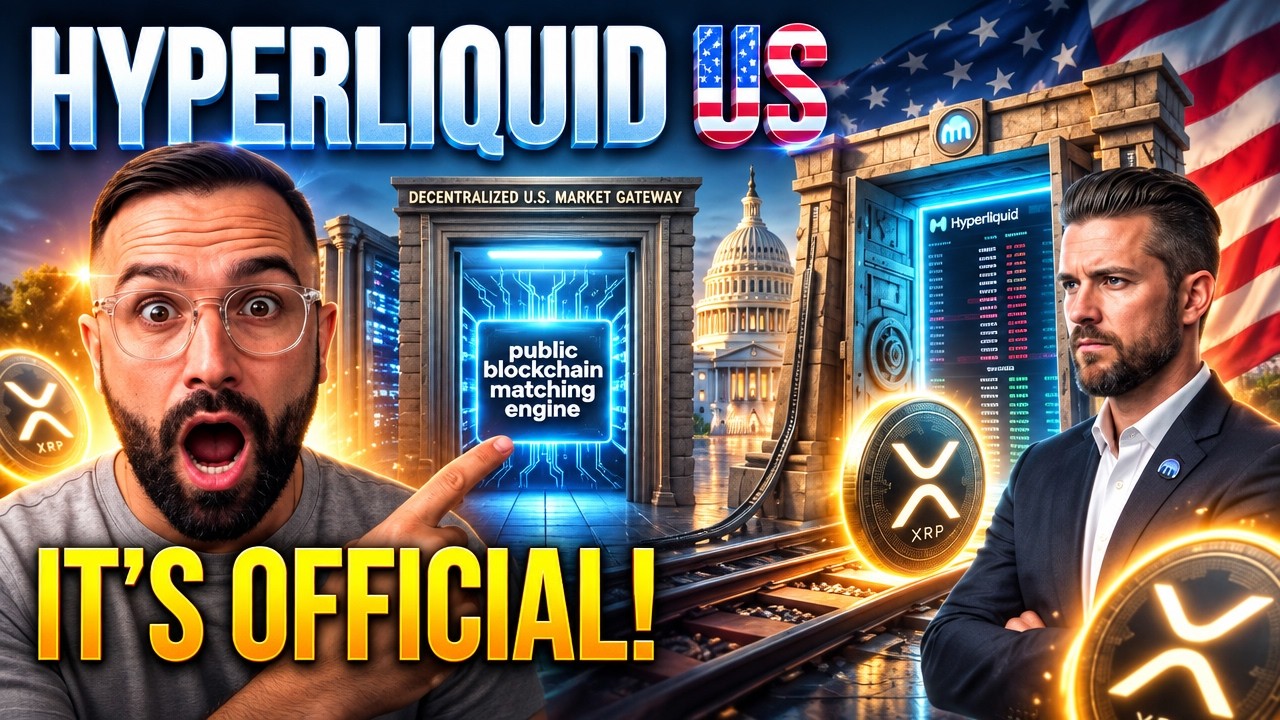
Hyperliquid has become one of the biggest names in on-chain derivatives trading, but access for US users has been heavily restricted. That may change. Payward, the parent company of Kraken, says it intends to bring on-chain perpetual futures to eligible US clients, starting with Hyperliquid.
There is a large qualification. This does not mean Hyperliquid’s existing global platform is opening to every American. Payward’s structure is regulated and permissioned, accounts would be onboarded through a registered broker, and the products remain subject to regulatory approval. Here is how it would work and what to watch.
What is Hyperliquid?
Hyperliquid is an on-chain trading ecosystem best known for perpetual futures. A perpetual future lets someone take leveraged exposure to an asset’s price without the expiration date of a traditional futures contract. That makes perpetuals useful to sophisticated traders, and it also makes them risky.
What sets Hyperliquid apart, according to the video, is the infrastructure underneath. Its public blockchain runs an on-chain order book that matches and records trades. Payward specifically says its proposed US markets would run on Hyperliquid’s public blockchain.
How would Payward’s US markets work?
Payward would connect regulated US derivatives infrastructure to Hyperliquid’s blockchain. Earlier this year, Payward agreed to acquire Bitnomial, a US crypto derivatives company holding the CFTC licenses needed for a fully integrated domestic derivatives business. The deal was valued at up to $550 million.
According to Payward’s announcement, each regulated entity would play a distinct role:
| Entity | Role |
|---|---|
| Bitnomial Exchange | Creates and administers the market |
| Bitnomial Clearinghouse | Clears and settles the contracts |
| NinjaTrader Clearing | Carries eligible client accounts |
| Hyperliquid public blockchain | Runs the market infrastructure |
Those entities would carry the relevant regulatory obligations. Payward says only accounts onboarded by NinjaTrader and placed on the appropriate allow lists would be able to trade.
So this is not anonymous offshore trading arriving in America. It is close to the opposite: the blockchain market infrastructure stays, and a regulated gate is placed in front of US users. Payward says it wants to be the first registered US exchange and clearinghouse group to deploy markets on Hyperliquid.
The video contrasts this with Robinhood’s blockchain work. Robinhood is moving traditional assets onto blockchain rails. Payward’s plan runs the other way, taking crypto-native infrastructure into regulated traditional finance.
Is it live yet?
No. Payward has announced its intention. The infrastructure exists and the regulated entities exist, but the new Hyperliquid-based contracts remain subject to regulatory approval.
The video stresses accuracy here. If you see a post saying Hyperliquid is now officially available to everyone in America, that is not what the announcement says. The accurate version: a regulated US route is being built, subject to approval.
What does it mean for the HYPE token?
The announcement alone doesn’t establish that HYPE, Hyperliquid’s token, benefits. The video separates two questions:
- Protocol adoption: More institutions using Hyperliquid infrastructure could be positive for the network’s relevance.
- Token value capture: Whether that usage flows back to HYPE economically, through fees, staking, buybacks or demand for the token.
The video calls skipping the second question one of the most common mistakes in crypto. A technology can succeed while its token captures less value than investors expected. That doesn’t mean HYPE won’t benefit. It means the value-capture question needs its own evidence.
The bigger picture: blockchains as market plumbing
The video sees three trends converging:
- On-chain trading is maturing. What looked like experimental DeFi infrastructure is increasingly treated seriously by established financial firms.
- Traditional firms want access to those rails. Payward isn’t proposing to replace Hyperliquid, but to have regulated entities use it.
- Regulators must work out how the two worlds fit together.
This could change what an exchange is. Traditionally, one company owns the whole stack: the customer interface, matching engine, internal ledger, settlement and custody relationships. Public blockchains can separate those layers, so the market infrastructure exists independently while several regulated brokers or apps connect users to it.
The video imagines a future where someone trades through a regulated financial app without knowing the market underneath runs on a public blockchain. In that world, the winners may be the networks that quietly become infrastructure rather than those with the loudest marketing.
What are the risks?
The video names two main risks:
- Regulation. Perpetuals involve leverage. The exact contracts still need approval, permitted leverage could be limited, the available markets could be limited, and the final structure could look very different from what crypto-native traders are used to.
- Competition. Hyperliquid is not the only derivatives venue. Centralized exchanges have deep liquidity, other on-chain perpetual platforms exist, and traditional futures exchanges have long institutional relationships.
The video’s caution: don’t jump from “Payward announced Hyperliquid” to “Hyperliquid automatically wins US derivatives.” That needs hard evidence.
Four things to watch next
The video lists the evidence it would watch:
- Regulatory approval. This is the first gate. An announcement is not a live market.
- Which contracts launch first. Bitcoin, Ethereum, HYPE or other assets? The first lineup will show how ambitious the US version is.
- Whether US traders use it. Infrastructure only matters if customers show up. Serious volume would be evidence; tiny volume would be evidence too.
- Whether HYPE captures any of the economics. Look at fees, staking, protocol revenue, buybacks and token demand. Measure rather than assume.
If approval comes, the video suggests this could become a blueprint for how crypto-native infrastructure enters mainstream finance: not by replacing Wall Street overnight, but by becoming part of the plumbing underneath it.
Frequently asked questions
Is Hyperliquid available in the US?
Not in the sense that Americans can use its existing global platform. Payward has announced a plan for regulated perpetual futures on Hyperliquid's public blockchain for eligible US clients, and those contracts remain subject to regulatory approval.
What is a perpetual future?
A perpetual future gives a trader leveraged exposure to an asset's price without the expiration date of a traditional futures contract. That can make it useful to sophisticated traders, and also very risky.
How would Payward's Hyperliquid markets work?
According to Payward's announcement, Bitnomial Exchange would create and administer the market, Bitnomial Clearinghouse would clear and settle the contracts, and NinjaTrader Clearing would carry eligible client accounts. Only accounts onboarded by NinjaTrader and placed on allow lists could trade.
Does this mean the HYPE token will go up?
The video says the announcement alone doesn't establish that. More institutional use of Hyperliquid could help the network's relevance, but token value depends on how that usage flows back to HYPE through fees, staking, buybacks or demand.
Education and commentary only, not financial advice. Crypto is volatile and you can lose money. Do your own research and speak to a qualified advisor before making investment decisions. Figures and quotes are as reported in the video on September 18, 2026 and may have changed since.


