
XRP Escrow and the Cryptex ETF Filing: What the Sentence Really Says
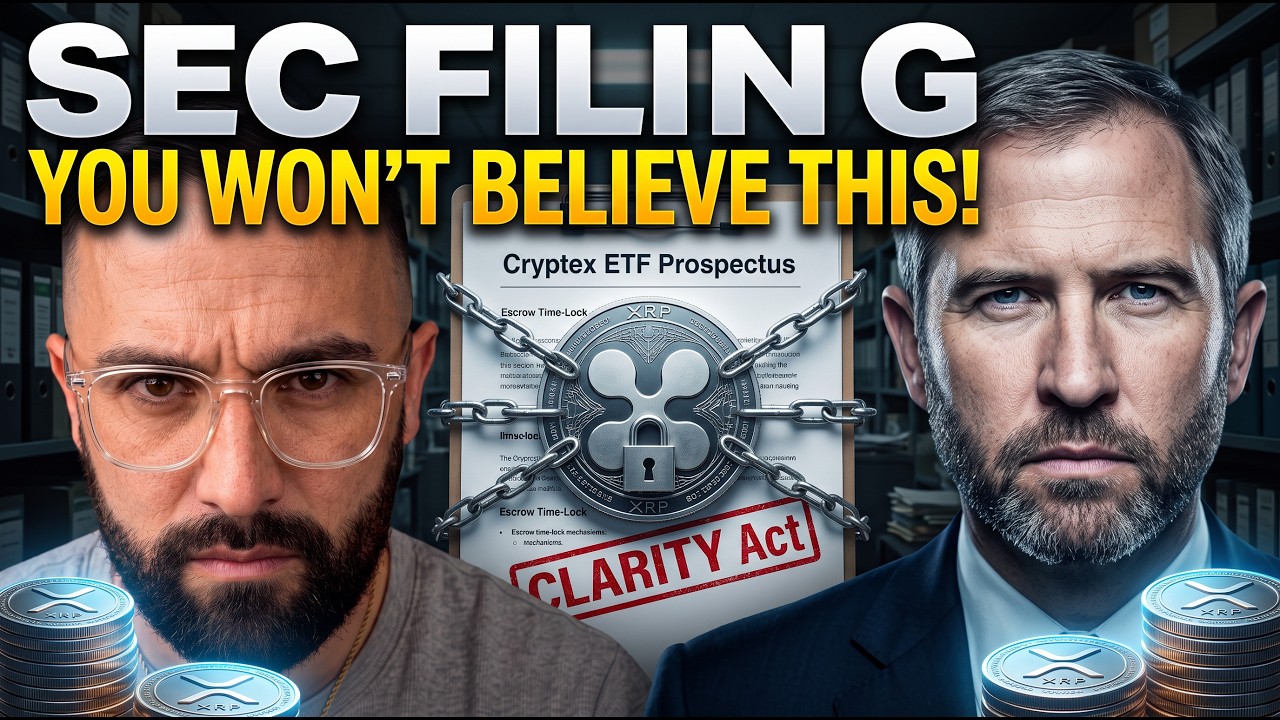
A Cryptex ETF filing says Ripple may release more XRP from escrow once rules are clear. What it says, why escrow can't be broken early, and what is unconfirmed.
Key takeaways
- Cryptex's August 24 ETF filing says Ripple has indicated it may release additional XRP from escrow if regulatory clarity arrives, citing the CLARITY Act as an example.
- The sentence is Cryptex's claim in its own prospectus. It is not an SEC statement, and Ripple has not publicly confirmed it.
- Ripple cannot pull XRP out of escrow early. Escrow time locks are enforced by the XRP Ledger itself.
- The realistic reading is that Ripple might re-lock less of each scheduled release. The filing says it has historically returned about 60% to 80% to escrow.
- Any change would show up on-chain in how much of each monthly release goes back into escrow.
A sentence in a new ETF filing has XRP holders asking questions. Buried in a prospectus of more than 100 pages, it says Ripple has indicated it could change how much XRP comes out of escrow once the US has clearer crypto rules, and it names the CLARITY Act. The problem is that Ripple does not appear to have announced any such plan, and even XRP-focused lawyers are asking where the information came from.
This video separates what the document says from what social media has turned it into. Here is the sentence, why “Ripple could unlock billions at will” is wrong, what the claim might realistically mean, and what would confirm or rule it out.
What does the Cryptex filing say?
On August 24, Cryptex Finance filed an amended registration statement for its proposed Cryptex Digital Market Cap ETF, a fund holding a basket of crypto assets. XRP has a 4.88% weighting in it, according to the video.
In the section on XRP supply concentration, the filing says Ripple has indicated that if regulatory clarity is established, for example through passage of the CLARITY Act, Ripple may release additional XRP from escrow to support on-ledger liquidity for stablecoin and foreign exchange pairs.
That is a very specific statement. But two distinctions matter:
- This is not the SEC speaking. Cryptex wrote the prospectus; it was filed with the SEC. Those are different things.
- It is not a Ripple announcement. Until Ripple confirms it, the sentence is Cryptex’s claim about Ripple, not new Ripple policy.
XRP attorney Bill Morgan spotted the wording and posted about it on X. He said he could not remember Ripple publicly making this statement either. The filing does not show where the claim came from: no link, no public statement, no named executive and no date.
The video lists the possibilities without choosing one: Cryptex may be referring to a Ripple statement most people missed, to a private conversation with the company, or it may have interpreted existing information too aggressively. For now, nobody outside those companies knows.
Can Ripple release XRP from escrow early?
No. Headlines suggesting Ripple could suddenly unlock more than a billion XRP whenever it wants misunderstand how escrow works.
Ripple’s escrow is enforced on the XRP Ledger itself. Each escrow has a scheduled time lock, and if it has not reached its programmed finish time, a transaction attempting to release it simply fails. Ripple cannot wake up one morning and pull billions of XRP out early because Congress passed a law. Under the existing escrow conditions, it is technically impossible.
What could the filing actually mean?
The realistic reading is about what Ripple does with XRP after it is released on schedule.
Ripple originally placed 55 billion XRP into escrow, with batches becoming available over time. Released XRP does not all reach the market. Historically, Ripple has put a large portion back into new escrows. The Cryptex filing itself says Ripple has returned roughly 60% to 80% of monthly releases to escrow.
So if the sentence is accurate, it most plausibly means Ripple could keep more of an already scheduled release in circulation instead of re-escrowing it. That is very different from breaking time locks, and it is still unconfirmed.
Why would Ripple want more XRP liquidity?
The filing gives a reason, and it is not “to sell while the price is high.” It links the possible extra supply to on-ledger liquidity for stablecoin and foreign exchange pairs.
The XRP Ledger has its own built-in decentralized exchange, and Ripple has been expanding its stablecoin strategy through RLUSD. If clearer rules make it easier for institutions and financial companies to use these markets, deeper liquidity becomes more important.
That creates a two-sided argument:
- More supply. More XRP in circulation can add selling pressure if demand does not keep pace.
- More usage. If the XRP is retained because on-ledger liquidity demand has grown, it could also reflect greater network use.
The video’s point is that “more XRP equals bad” is too simple. The real questions are what the extra XRP is used for and whether demand grows fast enough to absorb it.
Why does the timing matter?
Days before the amended filing, President Trump held a White House event with crypto and traditional finance executives. He called on Congress to pass “a fair version of the CLARITY Act.” Ripple CEO Brad Garlinghouse attended and posted from the White House alongside Trump, SEC Chair Paul Atkins and CFTC Chair Mike Selig.
So within about a week, Trump pushed for the bill, Garlinghouse was at the White House, and a prospectus appeared tying Ripple’s escrow behavior to that same bill. The video is careful to say this does not prove the events are connected, only that it is why the filing deserves attention.
It also corrects a separate claim: the CLARITY Act was not scheduled to pass on September 15. What was scheduled was a procedural cloture vote on a motion to proceed, set to ripen at 2:15 p.m. that day. Even if it succeeded, more legislative steps would remain before anything reached the president.
What would confirm or rule out the claim?
The video names three things that would turn this from speculation into something measurable:
- Ripple confirms or denies the policy. Either answer would be news.
- Cryptex explains its source, or the sentence changes or disappears in a later amendment.
- On-chain escrow behavior changes. If regulatory clarity advances, watch how much of each scheduled monthly release Ripple puts back into escrow. If the share retained changes materially, it will be visible on the ledger without anyone’s prediction.
What to watch next
The video’s summary: the story is not “Ripple is dumping a billion XRP,” because the evidence does not show that. It is that an ETF filing made a specific, unsourced claim about the largest XRP holder’s future supply strategy and tied it to a bill the president is pushing.
Until Ripple or Cryptex says more, the fair label is interesting, potentially important and unconfirmed. The things to follow are the source of the claim, Ripple’s monthly escrow behavior, and anything Ripple says directly.
Frequently asked questions
Is Ripple releasing more XRP from escrow?
Not confirmed. A prospectus filed by Cryptex Finance on August 24 says Ripple has indicated it may release additional XRP from escrow to support liquidity once regulatory clarity is established. Ripple has not publicly announced this, and the filing gives no source.
Can Ripple unlock XRP escrow early?
No. Ripple's escrows are enforced on the XRP Ledger with scheduled time locks. If an escrow has not reached its programmed finish time, a transaction trying to release it fails.
How much XRP does Ripple put back into escrow each month?
According to the Cryptex filing, Ripple has historically returned roughly 60% to 80% of each monthly release back into new escrows. Ripple originally placed 55 billion XRP in escrow.
Did the SEC say Ripple will release more XRP?
No. Cryptex wrote the prospectus and filed it with the SEC. A statement in an issuer's filing is the issuer's claim, not a position of the SEC.
What is the Cryptex Digital Market Cap ETF?
It is a proposed fund holding a basket of crypto assets. According to the video, XRP has a 4.88% weighting in it.
Education and commentary only, not financial advice. Crypto is volatile and you can lose money. Do your own research and speak to a qualified advisor before making investment decisions. Figures and quotes are as reported in the video on August 30, 2026 and may have changed since.