
XRP Security Checklist: 5 Ways to Protect 10,000 XRP or More
After Bitget paused withdrawals, a five-step plan for larger XRP holders: custody, seed phrases, destination tags, a written plan, and yield risk.
Key takeaways
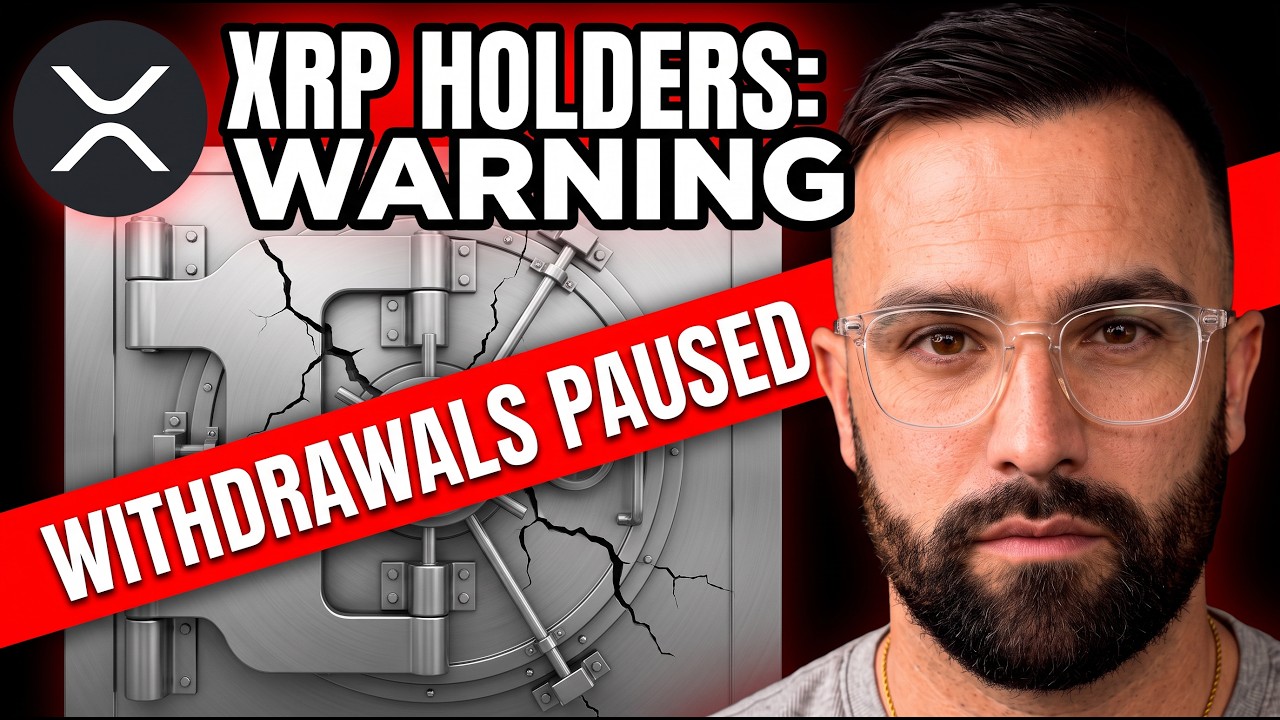
- Bitget paused withdrawals after roughly $387.5 million was taken from its hot and warm wallets. Bitget said its cold wallets were not affected.
- Ripple will never ask you to send XRP. Anyone asking you to send XRP to receive more XRP is running a scam.
- When sending XRP to an exchange, check the destination tag and send a small test amount first.
- Write down what you will do if XRP drops 30% or rises 50% before it happens, while you are calm.
- Before chasing yield, find out where it comes from, who holds your funds and what happens if prices move hard.
Last week, Bitget paused withdrawals after roughly $387.5 million was taken from its hot and warm wallets. Anyone whose XRP was sitting there couldn’t touch it while the exchange sorted things out.
For larger holders, the video argues, the biggest losses rarely come from the price itself. They come from everything around it: where the coins sit, how the keys are stored and decisions made in a panic. Here are the five steps the video lays out for anyone holding 10,000 XRP or more, plus a 60-second monthly check.
Why 10,000 XRP is worth protecting
According to the video, 10,000 XRP puts a holder in roughly the top 4% of funded XRP Ledger accounts. The host, a trader, frames the guiding rule this way: protecting what you have matters more than chasing what you don’t.
None of the steps below depend on where XRP’s price goes next. They cover the parts a holder can control.
1. Get most of it off the exchange
Keeping XRP on an exchange means the exchange holds it, and you hold an IOU. Your balance is the exchange’s promise to pay you back.
The Bitget story shows why that matters. Bitget said its cold wallets, which are kept offline, were not affected. The money that left came from wallets connected to the internet. The video also points to a bigger case: in February 2025, the FBI said North Korean hackers took around $1.5 billion from the exchange Bybit.
The lesson the video draws is that offline storage is the boring option, and boring keeps money safe. Its suggested split:
- Keep on the exchange only what you actively trade.
- Move the bulk of the position to a hardware wallet you control, where the keys never touch the internet.
2. Protect the seed phrase like it is the money
Once you hold your own keys, your recovery phrase (also called a seed phrase) is the only thing standing between your XRP and anyone else. The video’s rules for it:
- Write it down and keep it offline.
- Never type it into a website.
- Never photograph it.
- Never store it in a notes app or email.
- Never share it with “support,” whoever claims to be asking.
This matters even more for XRP holders right now. According to the video, Ripple CTO David Schwartz warned in May about a sharp rise in airdrop and giveaway scams aimed at XRP Ledger users. Ripple also said last year that it saw a surge in fake live YouTube videos during and after its Swell event, and Swell is coming up again later this month.
One rule catches almost all of them: Ripple will never ask you to send XRP. If someone asks you to send XRP to receive more XRP, it is a scam every time. Scams can be reported through the XRP Ledger website.
3. Check the destination tag every time
This step is specific to XRP, and it catches people out constantly. On most blockchains, an exchange gives each customer their own deposit address. On the XRP Ledger, exchanges often use one shared address for many customers. The destination tag is the number that tells the exchange which customer a deposit belongs to.
Send XRP to an exchange without the tag and the coins can arrive, but nobody knows they are yours. The official XRP Ledger documentation says this can need manual intervention, which means a wait in the support queue.
The video’s routine:
- Copy the destination tag and check it.
- Send a small test amount first.
- Send the rest only after the test arrives.
One related detail that alarms people: every XRP Ledger account has to keep a small reserve locked. At the time of the video, the base reserve was 1 XRP. If you can see a little XRP you can’t send, it hasn’t been stolen. That’s the reserve.
4. Decide your plan before the market decides for you
The video calls this the step that costs people the most. XRP was up roughly 46% over 90 days at the time of recording, yet still down roughly 17.6% for the year. Swings like that are when people make emotional decisions: selling the bottom in fear, or going all in at the top.
The host says nobody he respects in forex trading enters a position without knowing what they will do when it moves. That’s a plan, not a prediction. He suggests writing down answers to four questions:
- How much of my net worth is in one coin?
- What do I do if it drops 30%?
- What do I do if it rises 50%?
- What would make me change my mind?
The video doesn’t supply answers, because they depend on each person’s situation. Its point is that a holder who can’t answer them while calm won’t answer them well when the market is moving fast.
5. Understand what yield really costs
Most XRP sits idle, and offers to earn yield on it are everywhere, on exchanges and on-chain. One example on the XRP Ledger itself is the AMM, or automated market maker.
In plain English: you deposit two assets into a pool, people trade against the pool and pay a fee, and liquidity providers get a share of those fees. The fine print is that, according to the XRP Ledger documentation, liquidity providers can take a loss when the price between the two assets shifts.
Before chasing any yield number, the video says to ask three questions:
- Where does the yield actually come from?
- Who holds my funds while they earn?
- What happens to my position if the price moves hard?
If you can’t answer all three, the video argues, you are not earning yield. You are taking a risk you don’t understand.
The 60-second monthly check
The video closes with a short routine to run once a month:
- Is more on the exchange than my plan says?
- Can I physically find my seed phrase backup?
- What is my wallet connected to, and do I still use it?
- Does my written plan still match my situation?
If any answer is uncomfortable, fix that one thing that week.
What to watch next
With Swell approaching, expect fake livestreams and “giveaway” posts that use Ripple’s name. Treat any request to send XRP as a scam. Keep an eye on how Bitget handles withdrawals and repayment, since it shows what exchange customers can expect after a hack. And run the monthly check, so your setup doesn’t drift from your plan.
Frequently asked questions
How much XRP puts you in the top holders?
According to the video, 10,000 XRP puts you in roughly the top 4% of funded XRP Ledger accounts.
What happens if I send XRP to an exchange without a destination tag?
The XRP can arrive at the exchange's shared address, but the exchange won't know which customer it belongs to. The official XRP Ledger documentation says this can need manual intervention to sort out, which usually means a support ticket.
Why can't I send all of my XRP?
Every XRP Ledger account must keep a small reserve locked to exist. At the time of the video the base reserve was 1 XRP, so a small amount you can't send hasn't been stolen.
Can you lose money providing liquidity on the XRP Ledger AMM?
Yes. The XRP Ledger documentation says liquidity providers can take a loss when the price between the two assets in a pool shifts, even while they earn a share of trading fees.
Education and commentary only, not financial advice. Crypto is volatile and you can lose money. Do your own research and speak to a qualified advisor before making investment decisions. Figures and quotes are as reported in the video on October 2, 2026 and may have changed since.


