
XRP Ledger 3.4.0 Upgrade: What the Warning Means for Holders
The XRPL Foundation told server operators to upgrade to version 3.4.0 quickly. What the release changes, who it affects, and what XRP holders should watch.
Key takeaways
- The 'upgrade as soon as possible' instruction is aimed at people running XRP Ledger servers and validators, not ordinary XRP holders.
- Version 3.4.0 adds Lending Protocol v1.1 and a bundle of fixes called fixCleanup3_4_0, and permanently folds in an earlier AMM-related amendment.
- New features only go live on mainnet after validators reach sustained consensus through the amendment process. Servers that fall behind can become 'amendment blocked.'
- Lending Protocol v1.1 adds closed-ended vaults and cash basis accounting, which records interest only when it is actually paid.
- Better software does not automatically mean a higher XRP price. Watch for activation, real usage and whether that usage creates demand for XRP itself.
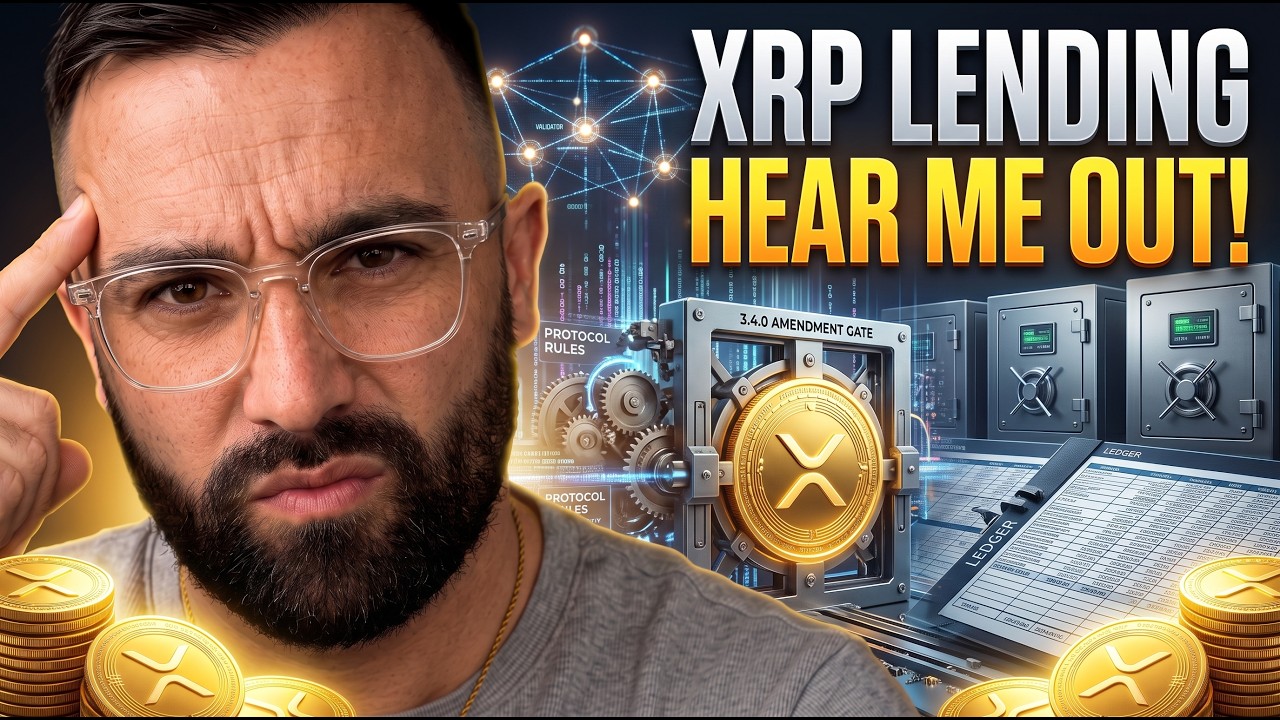
The XRP Ledger has a new software release, and its official notes contain a sentence that can sound alarming out of context. The XRP Ledger Foundation says that anyone running an XRP Ledger server should upgrade to the new version “as soon as possible to ensure service continuity.”
Seen on its own in a social media post, that could suggest a security problem or a network in danger. The video explains why it is neither. The release does include protocol fixes and changes to the ledger’s lending features, and it is a good example of how a decentralized network upgrades without one company flipping a switch. But it is aimed at infrastructure operators, and it is not evidence that XRP holders need to move their tokens.
What did the XRP Ledger release?
On September 17, version 3.4.0 of xrpld was released. xrpld is the reference server software that implements the XRP Ledger protocol. According to the official release notes, it:
- Introduces two new amendments: Lending Protocol v1.1 and fixCleanup3_4_0.
- Permanently incorporates an earlier AMM-related amendment into the protocol, retiring it as a separate switch.
- Includes bug fixes and build improvements.
- Distributes signed DEB and RPM packages through the XRPL Foundation’s own package infrastructure and signing key.
Why does it say to upgrade “as soon as possible”?
Because servers must stay compatible with the rules the network is running. Blockchains evolve through software. If the network activates new protocol rules and your server runs software that doesn’t understand them, your server can fall out of step with the current state of the network.
That is very different from “your XRP is unsafe.” It means operators of servers and validators need to keep up with the protocol they participate in.
The XRP Ledger has been here before. Earlier in 2026, RippleX publicly reminded node operators to upgrade ahead of a scheduled amendment activation and warned that outdated infrastructure could become amendment blocked, meaning unable to keep processing the ledger correctly.
How do new features go live on the XRP Ledger?
Through the amendment process, not at the moment code is published. Validators signal support for each amendment, and an amendment needs the required level of sustained consensus before it activates on mainnet.
So when version 3.4.0 includes a new feature, that feature is not necessarily live the moment the software ships. Release and activation are two separate steps.
What is Lending Protocol v1.1?
Lending Protocol v1.1 extends the XRP Ledger’s single-asset vaults and lending protocol. According to the release, it introduces two main changes.
Closed-ended vaults. These give a vault a defined life cycle with three stages:
| Stage | What it governs |
|---|---|
| Subscription | When assets can enter the vault |
| Investment | When lending can occur |
| Redemption | When assets can be taken back out |
Cash basis accounting. The previous model could recognize scheduled interest at the moment a loan was made. The new design recognizes interest income only when payment is actually received. In plain English: don’t count the money until it arrives. The video points out that for financial infrastructure, accounting rules like this are foundational, not a detail.
What does fixCleanup3_4_0 fix?
fixCleanup3_4_0 is a bundle of fixes affecting several parts of the protocol. The release lists changes including:
- How accounts interact with issuers that block incoming trust lines.
- Invariant checks for the permissioned DEX.
- AMM clawback behavior in specific rounding scenarios.
- Tighter invariants around Multi-Purpose Tokens.
The video is careful here: bug fixes do not mean the XRP Ledger is broken. Bitcoin, Ethereum, banking software and phone operating systems all fix bugs. The more useful question is how a network finds, reviews and deploys fixes, because a network meant to carry increasingly complex financial activity needs a disciplined upgrade process. The signed packages are part of the same effort: knowing exactly where server software came from matters when serious financial applications depend on it.
The real warning: complexity
The video argues that the real lesson is not that the XRP Ledger is failing. It is that every new financial function adds code that has to work correctly:
- Lending is more complicated than payments.
- Vaults are more complicated than simple transfers.
- Permissioned markets add extra rules.
- Tokenization creates more edge cases.
- DeFi creates more interactions between features.
That doesn’t make expansion bad. It means a network’s maturity is measured less by how many features it adds and more by how it tests them, fixes them, coordinates validators and evolves safely.
Does the upgrade mean XRP’s price will rise?
Not necessarily. The video calls “new software means price goes up” a lazy conclusion. A protocol can improve while the token price falls or stays flat, and a feature can activate and go unused. Technology and token value connect only when real economic activity creates demand, liquidity or utility that flows back to the asset.
The video also notes that the XRP Ledger ecosystem can grow while much of its activity is denominated in stablecoins, tokenized assets or other instruments. So “XRP Ledger usage is growing” is not the end of the question.
What to watch next
The video suggests three things to track:
- Activation. Do the new amendments reach validator consensus and go live on mainnet? Watch validator support.
- Usage. Do developers and businesses actually use the new lending features? Unused vaults have no economic significance; real borrowers, liquidity, products and volume do.
- Demand for XRP. Does any resulting activity create meaningful demand for XRP itself, or does it run mainly through other assets?
If you run XRP Ledger infrastructure, check the current XRPL documentation and release notes, since amendment votes and timelines can change. If you simply hold XRP, the release asks nothing of you.
Frequently asked questions
Is the XRP Ledger upgrade warning a sign of a hack?
No. According to the video, the instruction to upgrade 'as soon as possible to ensure service continuity' is aimed at server and validator operators so they stay compatible with the network. It is not a sign the XRP Ledger was hacked, and it does not ask holders to move their XRP.
What is in XRP Ledger version 3.4.0?
The release, published September 17, introduces two amendments, Lending Protocol v1.1 and fixCleanup3_4_0, retires an earlier AMM-related amendment by incorporating it permanently, and includes bug fixes, build improvements and signed DEB and RPM packages.
What does amendment blocked mean on the XRP Ledger?
If the network activates new protocol rules and a server runs software that doesn't understand them, the server becomes incompatible with the network. RippleX warned node operators earlier in 2026 that outdated infrastructure could become amendment blocked.
Do XRP holders need to do anything about the 3.4.0 release?
According to the video, no. The release tells server operators to upgrade. Ordinary holders are not asked to move their tokens.
Education and commentary only, not financial advice. Crypto is volatile and you can lose money. Do your own research and speak to a qualified advisor before making investment decisions. Figures and quotes are as reported in the video on September 20, 2026 and may have changed since.