
Crypto Exchange Froze Your Account? What Happens and Why
Why exchanges freeze crypto withdrawals, what it means for who controls your coins, and the custody questions to answer before it happens to you.
Key takeaways
- On an exchange, the platform generally controls the private keys. You may own the crypto legally while the exchange controls it technically.
- A freeze can be a routine security lock, a compliance check or a sign the platform itself is in trouble. The outcome depends on which.
- Self-custody removes the exchange as a failure point but makes your recovery phrase the single thing that can lose or leak everything.
- Know why each asset sits where it does, and make sure someone you trust could recover your wallet if something happened to you.
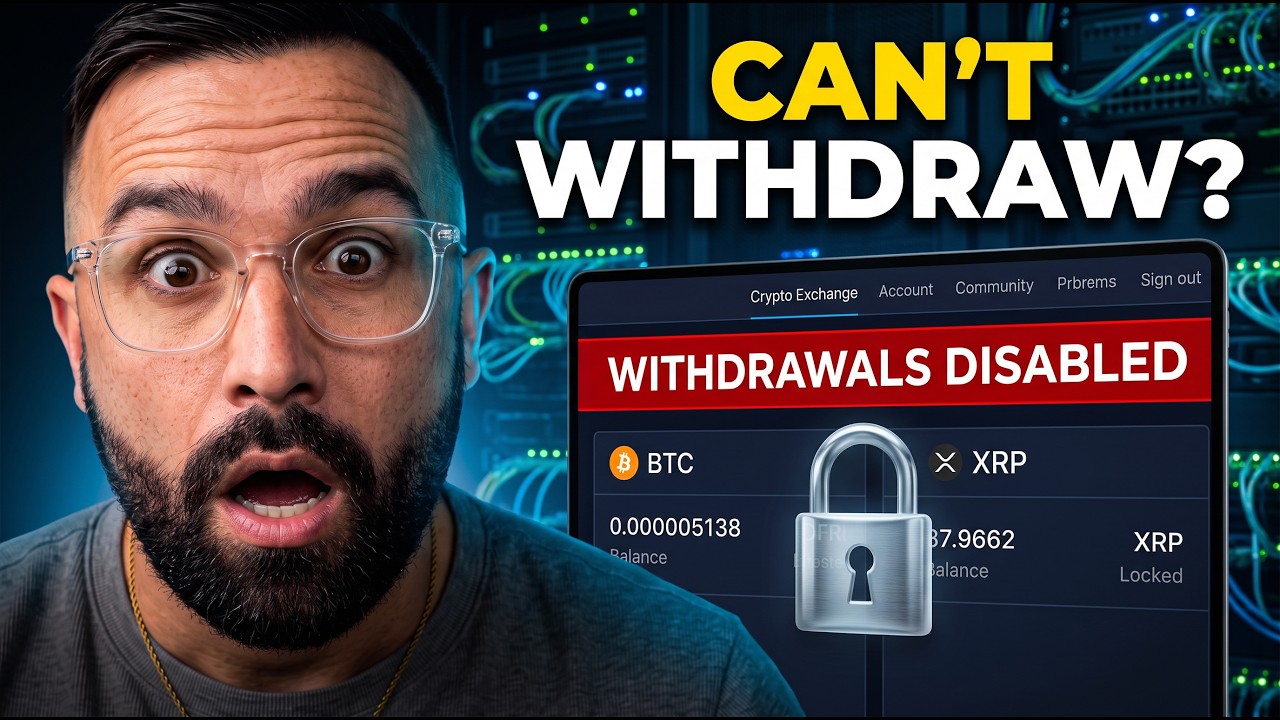
Imagine opening your crypto account and finding your Bitcoin and XRP still there, the balance unchanged, but the withdrawal button no longer works. You can see your money and watch the price move. You may even be able to trade inside the platform. You just can’t send anything out.
At that moment, who controls the asset: you, or the platform holding the keys? The video argues that this question sounds philosophical until an exchange freezes withdrawals, and then it becomes very practical. Here is what a freeze can mean, and the custody questions worth answering before one happens.
Who controls crypto held on an exchange?
The exchange does, in a technical sense. On a centralized exchange, the platform generally controls the private keys used to access the assets on the blockchain. Coinbase describes it plainly: on an exchange, the platform manages funds on your behalf and takes care of the private keys. In self-custody, you hold the private keys directly.
That does not make exchanges bad. They make buying, selling, password recovery and bank transfers easy, and customer support exists. For many people that convenience is valuable.
The trade-off is that you rely on the platform to honor your withdrawal request. If it is hacked, shut down, hit by a legal issue, becomes insolvent or simply suspends withdrawals, you may lose access even while the blockchain works perfectly. The SEC’s investor.gov custody bulletin warns that if a third-party crypto custodian is hacked, shut down or goes bankrupt, users may lose access to their crypto.
Is “not your keys, not your coins” accurate?
It is useful, but the video calls it too simplistic. With a reputable custodian, you may still have a legal claim to your assets. Coinbase, for example, says assets in its hosted wallets remain the customer’s and do not belong to Coinbase.
Operationally, though, Coinbase still controls the keys to those hosted wallets. Legal ownership and immediate technical control are not always the same thing, and a freeze is exactly when that difference shows.
What happens if an exchange freezes your account?
It depends on why. The video describes three broad scenarios:
| Reason for the freeze | Examples | What usually happens |
|---|---|---|
| Routine security lock | A suspicious login, a new device, a request for more identity verification, a withdrawal flagged by fraud detection | Often temporary: you prove who you are, the exchange reviews it and access may be restored |
| Regulatory or compliance check | Anti-money laundering rules, sanctions rules, travel rule requirements, local financial regulation | The platform wants information, such as details about the recipient and destination, before releasing funds |
| A problem with the platform | Liquidity trouble, operational failure, a cyberattack, insolvency or bankruptcy | The serious case: users may lose access while legal and bankruptcy processes play out |
Coinbase notes that transfers can require extra information about the recipient and destination depending on jurisdiction. So a withdrawal delay is not always a sign that an exchange is collapsing.
Is self-custody the answer?
Self-custody removes the exchange from the middle, but it brings a different set of risks. When you hold your own keys, a platform can’t freeze a wallet it doesn’t control, can’t stop you signing a valid transaction and can’t lose your key for you.
The catch is the recovery phrase. According to Coinbase’s self-custody documentation, the recovery phrase is what gives you access. Lose it and the provider may not be able to restore access at all. If someone else gets it, they can access the wallet. No support team can reverse the transfer and no fraud department can press undo; the blockchain does what a valid signature tells it to do.
Self-custody also means you can authorize a malicious transaction yourself: connecting to the wrong site, approving the wrong contract, giving away your recovery phrase or signing something you don’t understand. It requires more personal discipline.
What a hardware wallet actually does
A hardware wallet does not store your crypto. Your assets remain recorded on the blockchain. The wallet stores or protects the keys that let you authorize transactions, which is how investor.gov describes crypto wallets.
That matters in practice. Losing the device does not necessarily mean losing the crypto if you still have the correct recovery material. Losing both is a different situation. And exposing the recovery phrase to someone else can be worse than losing the device.
Two nightmare scenarios
The video frames custody risk as two different failures that feel the same:
- The custodial nightmare. You know your password and can see your account, but the platform won’t release the assets.
- The self-custody nightmare. The blockchain works perfectly and nobody has frozen anything, but you no longer have the credentials to sign a transaction.
Either way, you can’t reach your money. The cause, and the fix, are completely different. That is why the video suggests replacing “which is safer, exchange or wallet?” with a better question: which failure are you prepared for? Put everything on one exchange and the exchange is your single point of failure. Put everything in one wallet and that point may be one seed phrase, one device backup, one security mistake or one inheritance problem.
Four custody questions to ask yourself
The video offers these as risk management questions, not financial advice:
- How much crypto do you actually need on an exchange? If you trade actively or plan to sell part of a position quickly, an exchange can be useful. If coins sit untouched for years, ask why they are on a platform you don’t need to use. The point is to know why each asset is where it is.
- Do you understand your custodian? Investor.gov suggests researching the custodian’s background, how it safeguards keys, what happens if the company fails and what rights customers have if it becomes insolvent.
- If you self-custody, could you recover it? Think through a lost phone, a house fire, a broken hardware wallet, a forgotten password or becoming incapacitated. Storing a seed phrase in phone notes or cloud screenshots creates a different security problem.
- Would someone else know what to do if you died? Your family may not understand hardware wallets. If the recovery process exists only in your head, your heirs may legally own the crypto with no technical way to reach it. Custody and estate planning overlap.
What to check next
Security, the video argues, is not one thing. It covers counterparty risk, key management, fraud, operational risk, device failure, human error, inheritance and concentration. Custody is part of the investment, not an afterthought.
Before anything goes wrong, list where each of your holdings sits, who controls the keys and what would happen if that point failed. The worst time to start thinking about custody, as the video puts it, is after the withdrawal button stops working.
Frequently asked questions
Why would a crypto exchange freeze my account?
According to the video, there are three broad reasons: a routine security lock (a suspicious login, a new device or a flagged withdrawal), a regulatory or compliance check before funds are released, or a problem with the platform itself such as a hack, insolvency or bankruptcy.
If an exchange holds my crypto, do I still own it?
Possibly, legally. Coinbase, for example, says assets in its hosted wallets remain the customer's and do not belong to Coinbase. But the exchange still controls the private keys, so legal ownership and technical control are not the same thing.
Does a hardware wallet store my crypto?
No. Your assets are recorded on the blockchain. The hardware wallet stores or protects the keys that authorize transactions, so losing the device alone doesn't mean losing the crypto if you still have the correct recovery material.
What happens if I lose my recovery phrase?
According to Coinbase's self-custody documentation cited in the video, the wallet provider may not be able to restore access. And anyone who obtains the phrase can access the wallet, with no one able to reverse a transfer.
Education and commentary only, not financial advice. Crypto is volatile and you can lose money. Do your own research and speak to a qualified advisor before making investment decisions. Figures and quotes are as reported in the video on September 28, 2026 and may have changed since.


