Tokenized Funds on the XRP Ledger: What Aviva and Aberdeen Built
Two asset managers put money market funds on the XRP Ledger. Aviva's token cannot be traded and has a £1 million minimum. What that says about tokenization.
Key takeaways
- Only two traditional asset managers have tokenized funds on the XRP Ledger, according to the video, and both chose money market funds, the closest thing to cash.
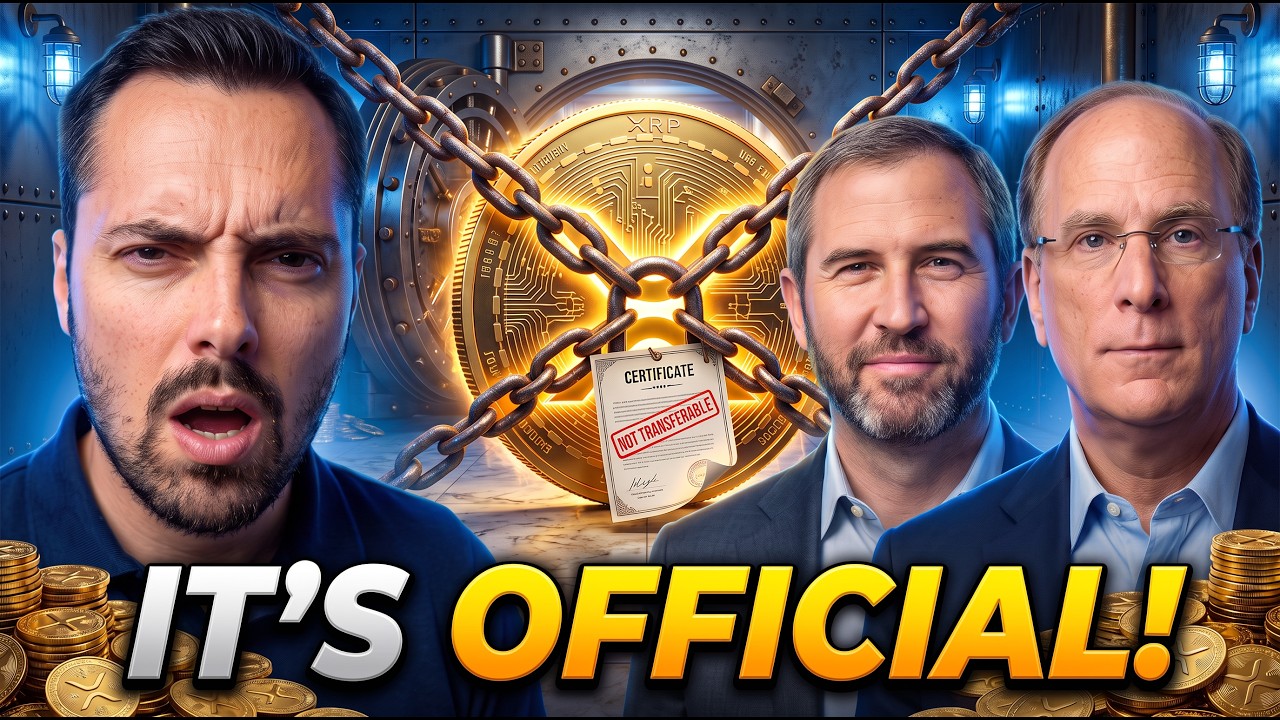
- Aviva Investors' token is a 'digital twin' of a fund share. It cannot be transferred or traded, only minted and redeemed, with a £1 million minimum.
- The underlying assets never move; they stay with BNY Mellon. The token sits on top of the old system rather than replacing it.
- Critics point to higher fees, inflexible smart contracts and legal uncertainty. Tokenized versions of some funds currently cost far more than ordinary ones.
- For any tokenization headline, ask two questions: can it actually be traded, and who is allowed to buy it?
The version of tokenization most crypto holders have heard is sweeping: property, bonds and shares split into pieces anyone can buy, trading around the clock. What actually went live on the XRP Ledger this summer looks very different: a money market fund with a £1 million minimum and a token that legally cannot be sold, traded or moved to anyone else.
The video argues that this is not a failure. It is what tokenization looks like when it has to get past a real regulator. Here is what two asset managers built, what the fund documents say, and what the critics are worried about.
Which traditional firms have tokenized on the XRP Ledger?
According to the video, exactly two, and both tokenized money market funds, which are about as close to cash as funds get. Not shares, bonds or property.
- Aberdeen, November 2024. Aberdeen made a money market fund inside its £3.8 billion US dollar liquidity fund available in token form through a platform called Archax. Ripple put $5 million of its own money in. The video argues this matters more than any partnership announcement: it is an actual allocation into an actual regulated fund.
- Aviva Investors, July 2026. Announced in February and launched at the end of July, this is a tokenized share class of an Ireland-domiciled money market fund. The Central Bank of Ireland had to approve it, and Aviva described the approval as a regulatory first.
In both cases, the underlying assets never move. According to the video, they stay at BNY Mellon, one of the world’s largest custodian banks, exactly where they were before. The token sits on top of the existing system rather than replacing it.
What can you actually do with the Aviva token?
Very little, by design. The fund’s prospectus describes the token as a digital twin: each token represents, and is at all times directly linked to, a corresponding traditional share of the fund, and cannot exist independently of it.
According to the video, the token:
- Cannot be transferred. You cannot sell it to another investor or send it to someone else’s wallet.
- Can only be minted and redeemed. Tokens are created when money comes in and destroyed when it goes out. That is the full list.
- Has no secondary market, no trading and no liquidity pool.
- Requires a £1 million minimum investment.
- Is reconciled daily against the traditional shares to make sure the two never drift apart.
The fund’s investment objective, risk profile, liquidity terms and regulatory protections are all unchanged. Investors get the same fund with a blockchain record underneath it.
Why build something this restricted?
Because the goal was to test the plumbing under real supervision with real institutional money before attempting anything harder, according to the video.
The gap between ambition and reality is clear. In a clip shown in the video, the head of the world’s largest asset manager says he wants the SEC to “rapidly approve” the tokenization of bonds and stocks. What shipped 18 months later is a cash fund you cannot trade.
Ripple’s own chief executive has voiced a similar caution. Speaking at Davos, he said the industry shouldn’t “tokenize everything just to tokenize something,” and that without a real gain in efficiency or transparency, it is just a science experiment.
The video’s reading is that nobody builds something this slow, restrictive and expensive as a marketing exercise. You build it that way when you plan to build something bigger on top and cannot afford the first version to break.
Where is tokenization heading?
A Boston Consulting Group report published last year sets out the road map the industry is working to. Its middle scenario has tokenized real-world assets growing from around $600 billion to around $19 trillion by about 2033. The video says the phases matter more than the number:
| Phase | What gets tokenized |
|---|---|
| 1. Low-risk instruments | Money market funds and bonds, wrapped carefully and kept restricted |
| 2. Complex assets | Private credit and property |
| 3. Market transformation | The structure of markets themselves changes |
The Aberdeen and Aviva funds are squarely in phase one. Knowing that, the video argues, stops you treating every announcement as the finish line.
What are the critics worried about?
The objections are specific, and none of the critics in the video call tokenization a scam. They say it is not automatically a benefit just because it is new.
- Cost. An author on the subject points out that BlackRock’s tokenized money market fund charges between 0.2% and 0.5% in management fees, while ordinary versions of essentially the same fund charge as little as 0.012%. That makes the tokenized version roughly 17 to 42 times more expensive.
- Overhyped benefits and rigid code. Hilary Allen, a law professor at American University, says some claimed benefits, especially financial inclusion, are overhyped. She warns that smart contracts execute inflexibly regardless of context.
- Legal uncertainty. Philipp Paech at the London School of Economics says legal uncertainty translates directly into risk and cost, which could cancel out the efficiency the technology promises.
- Consumer risk. The UK Financial Conduct Authority’s consumer panel warned last year about complexity, digital exclusion, unclear accountability if a smart contract fails, and frictionless trading encouraging panic selling.
At the same Davos panel, the governor of the Banque de France, who also sits on the European Central Bank’s Governing Council, said wider access to investment must go together with awareness of risk, advice and financial literacy. Otherwise, he warned, “it could be a catastrophe at the end.”
What does this mean for XRP holders?
According to the video, Ripple’s $5 million allocation and Aviva getting a tokenized share class past the Central Bank of Ireland show that the XRP Ledger’s rails are being tested by real institutions under real regulators. That is more than most chains can point to.
It is not, however, the moment pension money starts flowing through the ledger. The video is explicit: no pension fund has tokenized anything on the XRP Ledger. The host admits he originally planned a video along those lines, then read the fund documents and found the angle was wrong. His broader point is that misinformation in crypto rarely comes from people inventing things. It comes from people repeating claims they never checked.
Two questions for the next tokenization headline
The video suggests asking two questions whenever a tokenization announcement appears:
- Can it actually be traded?
- Who is allowed to buy it?
The answers tell you which phase you are looking at faster than any thread. If the token can’t be traded and only large institutions can buy it, you are still in phase one. Watch for the first tokenized products on the XRP Ledger that answer both questions differently: that would mark the move toward phase two.
Frequently asked questions
Which funds are tokenized on the XRP Ledger?
According to the video, two: Aberdeen made a money market fund within its £3.8 billion US dollar liquidity fund available in token form through Archax in November 2024, and Aviva Investors launched a tokenized share class of an Ireland-domiciled money market fund at the end of July.
Can you trade Aviva's tokenized fund on the XRP Ledger?
No. According to the fund documents described in the video, the tokens are not transferable. They can only be minted when money comes in and redeemed when it goes out, and the minimum investment is £1 million.
Did Ripple invest in a tokenized fund?
Yes. According to the video, Ripple put $5 million of its own money into the Aberdeen fund.
Has a pension fund tokenized assets on the XRP Ledger?
No. The video says no pension fund has tokenized anything on the XRP Ledger, and that headlines claiming otherwise did not hold up when checked against the source.
How big could tokenized real-world assets get?
A Boston Consulting Group report cited in the video has a middle scenario in which tokenized real-world assets grow from around $600 billion to around $19 trillion by about 2033, in three phases starting with low-risk instruments like money market funds.
Education and commentary only, not financial advice. Crypto is volatile and you can lose money. Do your own research and speak to a qualified advisor before making investment decisions. Figures and quotes are as reported in the video on August 26, 2026 and may have changed since.